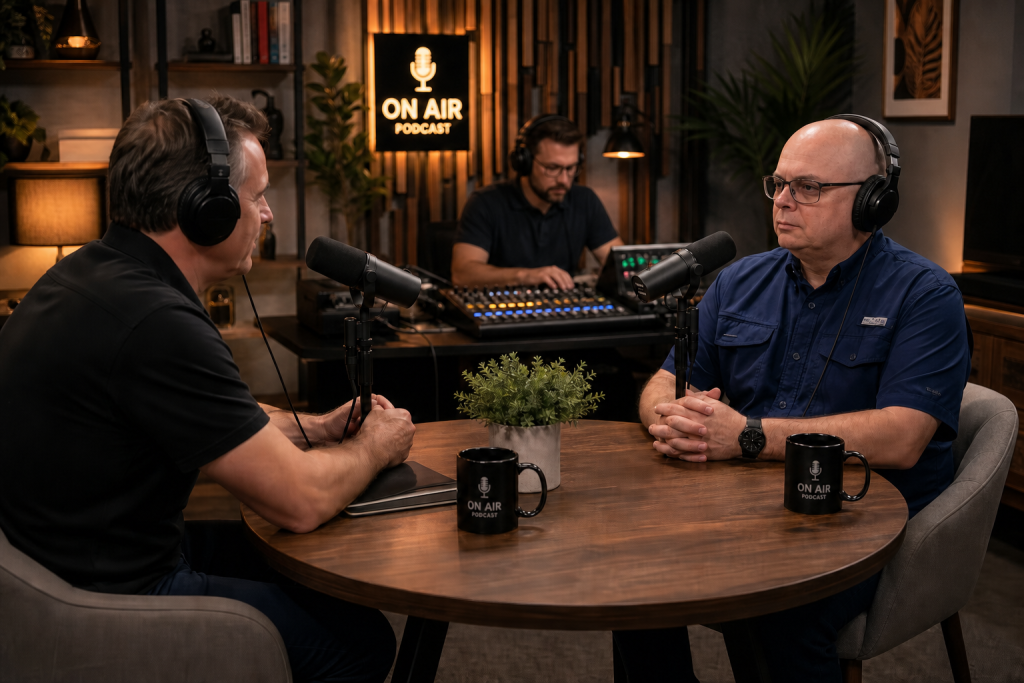
| Question: The origin story feels so personal. You wrote this in 1992 as a Christmas gift for your mother. What was happening in your life at that moment that made you sit down and create this world of anthropomorphic dogs? |
| Answer: That’s a really thoughtful question, and I appreciate you asking it. To be honest, I don’t think there was one big dramatic event that sparked it. At the time, I was a young police officer in my late twenties, living alone. I didn’t have any pets, and I wasn’t particularly connected to Rottweilers or any breed, for that matter. What I did have was a deep desire to give my mother something meaningful for Mother’s Day. She was a devoted reader and a lifelong dog lover. I went to the bookstore looking for something in the spirit of Charlotte’s Web — a story with heart, animals, and emotional depth — but I couldn’t find anything that felt quite right. I left feeling disappointed, and on the drive home, the thought just came to me: Why don’t I write her something myself? What started as a simple idea for a short story quickly grew. I ended up spending the better part of a year writing and hand-binding a single copy of the book. What started as a Mother’s Day gift turned into a Christmas gift. It became much more than I originally intended. In hindsight, I think part of what drove me was the desire to create something lasting for her — something that came from me, rather than something I bought off a shelf. She had always supported my creativity, and this felt like a way to give something back. |
| Question: Gunther’s heterochromia is such a powerful and deliberate choice. Why did you give him one blue eye and one brown, knowing it would be considered a serious fault in breed standards? Was there a specific message you wanted that visual difference to carry from page one? |
| Answer: The heterochromia actually wasn’t part of the original story I wrote in 1992. It came much later, during the revision process. My son has a dog named Chloe, and she became one of the characters in the book — Gunther’s sister. In real life, Chloe has one blue eye and one brown eye. When I learned that this trait is considered a serious fault in Rottweilers under both AKC and FCI standards, something clicked for me. I saw it as a powerful opportunity. Here was a real dog, beloved in our family, who carried what the breed world calls a flaw — and yet she was perfect in every way that actually mattered. Giving that same trait to Gunther, the smallest and most overlooked puppy in the litter, felt like the right way to make the story’s central question visible from the very first moment he appears. I wanted readers to understand immediately that Gunther doesn’t meet the expected standard of what a Rottweiler “should” be. That visual difference was meant to carry weight from page one. It’s a quiet but constant reminder that worth isn’t determined by conformity, pedigree, or how closely something matches an arbitrary ideal. Gunther’s eyes became a visible symbol of the very thing the book is asking: What do we do when something — or someone — doesn’t fit the mold we’ve been taught to value? In many ways, heterochromia became one of the most honest parts of the story, because it came from real life. |
| Question: Many listeners have written in asking this: How much of Gunther’s journey was inspired by real dogs you’ve known—especially your own Rottweilers like Barney—and how much came purely from imagination? |
| Answer: Thank you for the question. The truth is that Gunther’s entire journey came from pure imagination. When I wrote the original story in 1992, I had never owned a Rottweiler—or even met one. I knew very little about the breed at the time. The characters, their personalities, and the world they lived in were all created in my mind. I understood that departments like the Virginia Beach Police Department only used German Shepherds for K-9 work. I thought, ” Why not Rottweilers?” I chose Rottweilers because something about their strength and loyalty felt right for the story I wanted to tell. That said, life has a funny way of circling back. Years later, after my wife and I brought home our own Rottweilers—Barney and Freddy—I witnessed something that deeply moved me. When our son, Gunther, was just a toddler, those two big dogs instinctively watched over him with remarkable gentleness and protectiveness. They would flank him when he walked, and if he fell, they would immediately lie down beside him until he got back up. That quiet, instinctive guardianship stayed with me. When I revised the book decades later, I wove a piece of that real-life experience into Alexander’s lesson to his puppies—that all children are worthy of protection. So, while the original story was born entirely from imagination, a small but meaningful part of the revised version was inspired by the dogs who became part of our family. |
| Question: You’ve been very transparent about using AI for developmental editing, line editing, and even illustrations in this revised edition. What surprised you most about the process, particularly when you ran the full manuscript through Claude and it surfaced so many biblical and theological layers you hadn’t consciously intended? |
| Answer: The first thing that struck me about artificial intelligence was that it doesn’t care about one’s feelings—it’s brutally honest in its assessments. I imagine a skilled human developmental editor, line editor, and proofreader would reach similar conclusions, though perhaps with a gentler touch. It’s a bit like someone telling you that your baby is ugly. I’ve heard that some authors are so attached to their work that this kind of brutal honesty lands with the same emotional weight as that baby analogy. For me, my “baby” was ugly in places, but with that honest (and yes, sometimes brutal) feedback, I was able to turn a frog into a princess—or at least that was my hope. If you were to look at the actual first draft, the raw text exactly as I first typed it, you’d see that the bones were there, but the beauty and polish were missing. AI helped me in much the same way a human editor would have. For an amateur without a professional editing team, it was a genuinely valuable alternative. When it came to the biblical and theological review, I was not only shocked—I was at a loss for words. AI is sophisticated enough to cross-reference the manuscript with Scripture and theological scholarship, weaving in layers of connective biblical tissue that brought me, as the author, to a place of genuine humility. It turned out to be something very special, and I’m deeply grateful that it came together the way it did. |
| Question: Speaking of those layers—the book contains both overt epigraphs (like the 1 Samuel 16:7 quote) and what feels like subtle “Easter eggs.” How intentional were the deeper biblical themes of resilience, redemption, and “the Lord looks at the heart,” and how much emerged organically over the decades? |
| Answer: The epigraphs draw from biblical, New Testament, and secular themes. These were added during the editing process that began in 2024. It’s worth noting that I was in my twenties when I first wrote this story—I turned sixty in 2024. Few people, if any, remain the same person after even a decade, let alone four. For readers interested in exploring the biblical linkages in greater depth—many of which surprised me even as the author—I’ve outlined them on the website in the Discussion Link section. In an article published there, I described my reaction as “shocked” after asking AI (Claude) a simple question: “What overt or hidden themes, either directly or indirectly, are embedded in the story that have biblical references?” What it uncovered truly took my breath away. To answer directly: I’d estimate that only about a quarter to a third of the biblical references were consciously intentional. The majority emerged organically, finding their way into the story through what I can only describe as unconscious influence. |
| Question: Why did you choose to make Gunther the first Rottweiler K-9 in the story when you knew historically that wasn’t accurate? What did that fictional choice allow you to explore that a strictly realistic version wouldn’t have? |
| Answer: It’s a fair question, and one I’ve thought about more in recent years than when I first wrote the story nearly four decades ago. At the time I began writing, I knew the Virginia Beach Police Department exclusively used German Shepherds for K-9 work. I later learned that the department had, in fact, employed a Rottweiler years earlier. Rather than follow that historical detail, I deliberately chose to establish Gunther as the first Rottweiler on the team. I selected the Rottweiler because it carried its own powerful, almost legendary reputation—distinct from the German Shepherd—yet still credible in police work. Other strong breeds, such as the Siberian Husky or St. Bernard, could have created a similar contrast, but they lacked the same commanding presence and historical weight I needed for the story. What the Rottweiler allowed me to do was introduce a foundational figure named Alexander—a dog whose legacy would come to define the breed’s place within the story. By anchoring the Rottweiler’s traditions so firmly in this one powerful predecessor, I created a much higher and more meaningful barrier for the protagonist. Whether in his original 1992 form as Barney or in his later incarnation as Gunther, the dog would have to prove himself not only against the established German Shepherds, but also against the near-mythic standard set by Alexander. This fictional choice gave me the freedom to explore deeper themes that a strictly historical account would have constrained: the weight of legacy, the pressure of being “the first,” the tension between inherited tradition and individual merit, and ultimately, what it truly means to earn one’s place. It allowed the story to move beyond procedural realism and into questions of identity, acceptance, and character—ideas that later resonated with the biblical undercurrents readers have noticed in the book. |
| Question: The soundtrack and QR codes are such a unique multimedia feature. How did the idea of pairing original songs with specific scenes come about, and do you have a personal favorite track that captures Gunther’s spirit best? |
| Answer: Thank you for the question. The soundtrack and QR codes actually grew out of a happy accident. In 2025, I discovered an AI music app called Muzio and began experimenting with it purely out of curiosity. At first, I wasn’t trying to create songs specifically for the book—I was simply fascinated by what the technology could do. My initial attempt, a track called “Badge on Their Chest,” had a strong melody but the lyrics didn’t deliver the emotional depth I felt the story needed. That early disappointment became a turning point. I kept refining my approach, and over the course of the next year the project evolved from casual experimentation into something much more intentional: pairing custom songs with specific scenes to heighten the emotional impact for readers. What began as play eventually became a year-long creative process. In the end, I embedded 94 original songs throughout the book, each tied to key moments in Gunther’s journey. I could have included many more, but I eventually had to draw a line. I also created dozens of additional parody versions of popular songs that thematically connect to the story. Because of copyright considerations, I chose not to include or monetize them in the book itself, even though they qualify as fair use parody. Instead, I host them on the website under “Parody Songs,” where I give full credit to the original artists and songwriters. When it comes to my personal favorites, I have several that I feel capture different sides of books and some of the character’s spirit. The melodic track “Demons Won’t Sleep” reflects Alexander’s inner struggles and haunted resolve. The rap song “Lil’ Rottie” channels Gunther’s raw energy, toughness, and street-smart edge. The acoustic ballad “Metzgerhund” brings out the Rottweiler’s breed more reflective and historical side, while the Scottish rock anthem “Last Stand” embodies a determined resilience and unyielding puppy who left somewhat timid but returned a warrior. Each one highlights a different facet of his character. |
| Question: Many characters are named after real pets you’ve loved (Max, Smalls, Letty, Chloe, Annie, etc.). Was there one character whose personality or arc felt especially close to a dog you’ve known in real life? |
| Answer: The book also features two other beloved pets from our family: Neo, a German Shepherd who lived with us for many years, and Barney, our first Rottweiler. Both appear as supporting characters. Of all the pets we’ve had, Max and Smalls clearly had the biggest personalities. They held a special place in our hearts and lived long, happy lives together. The two were inseparable and relied on each other much like brothers. We selected Max from a personal breeder in Hampton, Virginia, in the summer before our son left for college. Shortly afterward, we rescued Smalls from the SPCA in Virginia Beach. Interestingly, Smalls had already been returned to the shelter twice before we found him. When we brought him home, his original name was “Shadow,” but we felt he deserved a fresh start and a new name as he began this different chapter of his life. Smalls was a wonderful dog for his entire life. He played beautifully with Max and coexisted peacefully with our cat, Samantha. Smalls passed away in the spring of 2025, and Max crossed the rainbow bridge a few months later. |
| Question: The wolf alliance and Magnus’s storyline feel like a major tonal shift into something more epic and primal. How did that wild-world section develop, and what were you hoping readers would feel when Gunther crosses into that dangerous new territory? |
| Answer: As a relatively new author at the time, I wasn’t fully prepared for how dramatically the story would shift once Gunther left the safety of the kennel and Payge and Caitlynn’s care. Moving from an innocent, vulnerable puppy trying to prove his worth into the raw, unforgiving laws of the wild felt like a necessary leap, but it required careful handling. My goal in Part 3 was to give Gunther the space and the trials he needed to genuinely earn the courage, resilience, and inner strength he would later draw on when confronting real human danger in Part 4. I knew he couldn’t simply return to the human world and suddenly face something as threatening as Crazy Willie without the reader feeling that transformation had been earned through lived experience rather than author fiat. That’s why the wild section had to be more than just an adventure. I wanted it to leave emotional and psychological “scars” on Gunther—lessons in survival, loyalty, and the balance between fear and determination—that would make his later actions feel credible and earned. At the same time, I had to work within a limited narrative window before he returned to humanity, so every challenge had to serve multiple purposes: advancing Gunther’s growth while also feeling grounded in the realities of wolf behavior and pack dynamics. One of the most frequent questions I’ve heard concerns the confrontation with Boris the bear and whether it strains credibility. That scene wasn’t written primarily as a display of raw power. It was there to answer a deeper question I kept asking myself: How do I make readers believe Gunther could eventually stand up to a dangerous human criminal? If he hadn’t faced primal, life-or-death stakes in the wild and come through transformed, asking the reader to accept his later heroism would have felt unearned. The bear encounter, along with the other trials, was meant to build that trust through action and consequence rather than simple declaration. By the way, I addressed the criticism of the bear confrontation in the Afterword, at the back of the book. Magnus’s arc was equally important. I didn’t want him to feel like a convenient plot device or sidekick. He needed his own compelling journey and internal stakes, even though the book isn’t centered on him. Giving him a full protagonist-level backstory within the subplot allowed his relationship with Gunther to feel reciprocal and meaningful. I was conscious of the risk of over-developing that thread and potentially pulling focus away from Gunther, so I tried to keep Magnus’s story tightly woven into Gunther’s growth rather than letting it sprawl. An interesting development came during the editing process. I realized I needed to explain why a wild wolf would risk his own safety to save a helpless domestic puppy. The answer that felt most authentic was rooted in the concept of nature’s balance. In Magnus’s worldview, allowing a domestic dog to die through inaction would represent an unnatural disruption of that balance. That motivation gave their alliance a deeper, almost philosophical foundation and helped the reader accept the bond between two very different worlds. Overall, when Gunther crosses into the wild territory, I hoped readers would feel a genuine sense of entering a more primal, dangerous, and awe-inspiring realm—one that strips away the comforts of the kennel and forces him (and the reader) to confront raw survival, unexpected loyalty, and the forging of courage. The shift is meant to be disorienting at first, then transformative, so that by the time Gunther returns to the human world, both he and the reader understand that his growth wasn’t given to him; it was hard-won in a place where weakness has immediate and unforgiving consequences. |
| Question: A middle school teacher wants to know: What do you most hope young readers (around 11 and up) take away from Gunther’s story about belonging, courage, and not being defined by how others see you? |
| Answer: I hope young readers come away understanding that being different is not a flaw or a handicap—it’s simply the starting point. What matters most is what you choose to do with it. Gunther’s journey is built around that truth. As the smallest Rottweiler in a family that values strength and tradition, he enters the world already labeled “different.” The story deliberately places obstacle after obstacle in front of him—expectations from his father and brothers, the weight of family tradition, and even a literal confrontation with a grizzly bear—all of them trying to steer him away from his own dream. Yet at every turn, Gunther refuses to be diverted. He keeps showing up, keeps trying, and keeps listening to something deeper inside himself. One of the most important moments for young readers happens in Gunther’s dream, when a guiding spirit offers this simple but powerful advice: “Trust the voice that refuses to disappear when everything else tells you to stop.” I want 11-year-olds (and the adults reading with them) to feel the weight of that line. It’s not about being the loudest or the biggest. It’s about recognizing that quiet, persistent inner voice—the one that says “keep going”—and choosing to listen to it even when the world is loud with doubt. Later, in Part 3, there’s a subtle but meaningful exchange that many readers might miss at first. Magnus tells him he has a “Watch me win smile.” It’s not a big, flashy grin. It’s quiet, steady, and completely genuine. That smile is my way of showing that Gunther’s inner fire has become so bright and so certain that nothing—neither his family’s doubts, nor tradition, nor even a grizzly bear—can extinguish it. The smile is simply the outward reflection of an inner power that has already decided the outcome. Gunther isn’t trying to prove anything to anyone else anymore. He’s simply being who he is. To make this concept even more real for young readers, I’ll share something from my own life that bleeds into the above theme. For more than thirty years, I lived and worked in Virginia Beach, home of the U.S. Navy’s East Coast SEAL Teams (including the famous Team 6). One of the people I met there was a former Navy SEAL named Dan. If you only knew him from Hollywood movies, you might have expected someone who looked larger-than-life—chiseled, imposing, and instantly recognizable as “special forces.” Dan looked nothing like that image. What he did have, though, was exactly the same quiet, unshakeable “Watch me win smile” that Gunther eventually carries. It wasn’t arrogance or showmanship. It was the calm certainty that comes from knowing who you are and trusting what you’re capable of, no matter what anyone else expects or assumes. That’s the heart of what I want young readers to carry with them: Being different doesn’t make you less. It can actually be the very thing that gives you an advantage if you learn to trust it. Courage isn’t the absence of fear or doubt—it’s the decision to keep moving toward your dream anyway. Other people’s opinions (even the opinions of those who love you) do not get to write your story. Only you do. When readers—especially those who have ever felt “too small,” “too different,” or “not enough”—see Gunther’s journey, I hope they recognize that same inner voice in themselves. And maybe, just maybe, they’ll start practicing their own “Watch me win smile.” |
| Question: The prologue with the Canine Vocal Translator and the Harmonic Bridge is such a striking frame. Why did you decide to bookend the story this way, and what does that futuristic device represent thematically for you? |
| Answer: In the original draft, the story was told entirely from Gunther’s perspective through classic anthropomorphism—animals speaking among themselves in a self-contained fictional reality that readers instinctively accept. That approach worked, but it kept the communication one-sided: dogs talking only to dogs, or other animals. I wanted something bolder. I wanted Gunther to speak directly to us—to break the fourth wall between species and let a dog address human readers with full agency and clarity. The Canine Vocal Translator and the Harmonic Bridge became the mechanism that made that possible. Rather than relying on pure fantasy, I built a quiet, off-screen scientific subplot in which researchers like Dr. Voss and her team developed the Harmonic Bridge—a plausible bridge between canine vocalizations and human language. This device doesn’t just translate; it creates a resonant, harmonic interface that allows selected dogs to form coherent, emotionally nuanced speech that humans can understand in real time. By grounding the breakthrough in emerging technology (rather than magic or unexplained whimsy), the story gains a layer of believability. It feels like something that could happen, which makes Gunther’s voice feel more immediate and urgent. I also made Gunther deliberately rare. He is one of only a very small number of dogs capable of using the device effectively. This choice prevents the world from being upended by a sudden epidemic of talking dogs and keeps the focus on one extraordinary individual’s journey. It underscores that true interspecies understanding is still exceptional, fragile, and hard-won—much like empathy itself. The bookending structure is deliberate and thematically essential. The prologue introduces the Harmonic Bridge as the technological key that unlocks Gunther’s story for human ears. The story then unfolds entirely through his perspective, and the framing returns at key moments (including an extended video message Gunther sends to William Calhoun while the man is in prison—available as extra content on the companion website). By closing the loop this way, the device becomes more than a plot device; it becomes the narrative conduit through which Gunther claims his voice and delivers his testimony. We don’t just overhear his life—we receive it as a direct communication, as if he is reaching across the species divide to teach us. Thematically, the Harmonic Bridge represents the possibility—and the difficulty—of genuine connection across profound differences. It stands for the bridges we build (or fail to build) between the “other” and ourselves: between animals and humans, between the silent and the voiced, between instinct and language, between isolation and understanding. It symbolizes the moment when an animal’s inner world is no longer assumed or projected, but actually heard. In a story that explores loyalty, loss, resilience, and the search for meaning, the device gives Gunther the power to articulate those experiences on his own terms. It transforms him from a beloved pet into a narrator with moral and emotional authority. The companion website deepens this layer with additional material, including a fictional scientific journal entry written in Dr. Voss’s voice that explains the technology in more technical detail. These extras reinforce the idea that the Harmonic Bridge is not merely narrative scaffolding—it is part of the story’s larger meditation on what it would truly mean for humans to listen to the creatures we share our lives with. In the end, the framing exists so that Gunther’s journey does not remain trapped inside an animal-only world. It exists so that his story becomes something we—dogs and humans alike—can learn from together. |
| Question: Redemption arcs are powerful in this book—especially with characters like Max and Smalls. Without giving too much away, how did you approach writing those moments of growth and atonement? |
| Answer: In the original 1992 version of the book, redemption arcs were entirely absent. The characters we now know as Max and Smalls were originally named Alex and Capone. They stayed troubled and conniving to the end, and the story delivered a straightforward lesson in “just deserts”—Gunther’s brothers simply reaped the consequences of their choices with no opportunity for meaningful change or healing. When I revisited the story for this revised edition, I felt there was far more to explore by giving both Max and Smalls something redeemable. This shift grew directly out of my own religious growth in the decades since the first version was written. Over time, I came to understand that a story can be enriched not merely by showing evil defeated by external good, but by watching evil defeated from within—through one person’s hard-won journey of atonement. That kind of internal victory carries a different weight. It reflects the hope that real transformation is possible, even for those who have caused deep harm, and it mirrors the redemptive themes that have long resonated in literature and faith traditions alike. Of course, I didn’t want redemption to feel cheap or unearned. Their past sins demanded real sacrifice—painful choices, genuine cost, and no automatic guarantee of absolution. I approached their growth the same way we experience it in life: slowly, imperfectly, and only after they had confronted the full weight of what they had done. This meant crafting moments where their desire to change collided with their old habits, forcing them to prove (to themselves and to the reader) that their transformation was authentic. The result was a much richer and more meaningful story. As readers walk with Gunther toward his own satisfying conclusion, they also walk alongside Max and Smalls. It becomes natural to root for them—we want to believe people (and dogs) can change—but it is ultimately up to those characters, through their actions and sacrifices, to earn that belief. By the end, their redemption isn’t something the plot simply grants; it’s something they have fought for and, in many ways, something the reader has earned the right to celebrate alongside them. This layered approach didn’t just add depth to two supporting characters; it also enriched the story. It allowed the entire narrative to explore the tension between justice and mercy, accountability and grace, in a way the original version never could. The story became less about simple punishment and more about the difficult, hopeful possibility of restoration. Max and Smalls embodied a more benign form of evil—selfish and opportunistic, yes, but never truly irredeemable. For the purposes of this revised edition, I chose to view them as redeemable from the very beginning; they simply needed time, the right circumstances, and the internal motivation to grow beyond their flaws. Their “evil” was the everyday kind that many of us recognize in ourselves or others—flawed humanity rather than outright malevolence—which made their eventual path toward atonement feel both believable and earned. In contrast, two other characters, Napoleon and Crazy Willie, represented the story’s true dark forces. They embodied a deeper, more destructive malevolence that went beyond self-interest into deliberate harm and unrepentant cruelty. This distinction allowed the narrative to explore a fuller spectrum of moral complexity: not every flawed person is beyond hope, but some evils run darker and require far greater confrontation before any light can break through. If you choose to read the additional content available on the website, you’ll find the complete account of what ultimately happened to Crazy Willie. There, the possibility of redemption reappears, though at a much slower and more arduous pace. His journey underscores a central truth the story seeks to explore—that even those who have sunk the deepest can still find their way back, but only if they are willing to face the full cost of their actions over time. This slower arc stands in deliberate contrast to the quicker (yet still hard-won) redemptions of Max and Smalls, reminding readers that grace and change are available to all, but never on easy terms. |
| Question: You mention in the Author’s Note that the story occasionally stretches what’s physically possible for a puppy Gunther’s size. How did you decide where to draw that line between magical realism and staying grounded in a believable puppy’s world? |
| Answer: In The Smallest Rottweiler, I deliberately included specific height and weight details for Gunther (and, in one scene, for Max and Smalls) because these measurements serve as quiet anchors that keep the story believable. By giving readers concrete numbers at key moments, I wanted to make it clear that every action Gunther takes—how fast he can run, how far he can walk or travel, how high he can reach or climb—is always scaled to his actual size at that point in the story. Nothing he does is meant to feel like a superpower; it’s always meant to feel like something a determined but realistically small and growing puppy could manage. These details help readers visualize the scale and trust that the story respects the physical limits of its canine characters rather than ignoring them for convenience. This same principle guided the confrontation with Boris the Bear. Neither Gunther nor Magnus “defeats” the bear in any heroic or exaggerated way. Gunther’s contribution is limited to climbing onto Boris’s back and biting him—essentially a small, opportunistic act of courage. The bear’s undoing comes entirely from his own blinding rage and loss of control. By keeping Gunther’s role so modest and realistic, I avoided turning the scene into a fantasy of a tiny puppy overpowering a much larger animal. The emphasis stays on circumstance, cleverness, and the bear’s self-destructive behavior rather than any unrealistic physical feat. I was very conscious of the boundary between magical realism and grounded puppy reality throughout the book. There were a few moments where the story came close to that line, but I worked hard to ensure it never crossed. The more fantastical or adventurous elements were always tempered by the practical constraints of Gunther’s size, age, and species. The goal was to let the story feel magical and surprising without ever asking readers to suspend their disbelief about what a puppy’s body can actually do. One realistic aspect of puppy life that I chose not to dwell on is the intense teething and chewing phase that Rottweilers (and most puppies) go through. Anyone who has raised a Rottweiler puppy knows how destructive they can be—I’ve lived through it, and it’s no exaggeration to say a teething Rottweiler can destroy a couch in a single afternoon. In real life, if Gunther had been left alone in the apartment for any meaningful stretch of time, he almost certainly would have had accidents on the floor and chewed table legs, baseboards, or anything else within reach. Including those everyday destructive behaviors would have constantly pulled the narrative away from the central journey and the emotional arc I wanted to explore. So, I deliberately chose to streamline those elements and keep the focus on Gunther’s growth, relationships, and adventures. At the same time, I wanted to be honest with readers who know the breed: Rottweiler puppies are not low maintenance. If you’re considering bringing one home, please never leave them unsupervised in your house or apartment—even for a few minutes. The reality of what you’ll come home to can be both surprising and expensive. By providing the size details, keeping actions proportionate, limiting Gunther’s role in the bear scene, and consciously setting aside the more chaotic side of puppy life, I tried to create a story that feels both wondrous and believable. The line between magical realism and grounded reality stayed intact because every choice was measured against one simple question: Could a puppy this size, at this stage of life, actually do this? In my view, the answer was always yes. |
| Question: A fan asked: Was there any scene that was emotionally difficult for you to write, either because it hit close to home or because you had to balance heartbreak with hope? |
| Answer: Yes, two scenes stand out as particularly challenging—both because they required me to walk a very fine line between raw pain and the possibility of hope, and because they touched on themes, I’ve witnessed firsthand in real life. The first was the moment involving Alexander’s emotional trauma and his desperate need for affirmation from his friend, MJ. Specifically, when Alexander asks, “I’m a good dog, aren’t I?” I struggled for a long time with how to portray a father who has abandoned his child (puppy) without turning him into a one-dimensional villain or a caricature of failure. I wanted readers to feel the full weight of Alexander’s self-loathing and fractured sense of worth—rooted in deep, unresolved pain—while still seeing the genuine love and longing for redemption beneath it. The difficulty lay in showing that a man can want desperately to be a good father and still make choices that cause profound harm. His emotional wounds are so raw that he cannot give himself the very answer he craves; he has to hear it (or hope to hear it) from the child he has hurt most. That vulnerability felt essential. It humanizes (animalizes) Alexander without excusing his actions and reflects the complicated reality that trauma doesn’t erase love—it often distorts it. The second difficult scene was the conversation between Marlene and Millicent in the aftermath of believing Alexander was dead. Drawing from my years in law enforcement, I’ve sat with families in the rawest moments of grief and heard versions of this exchange many times—the unanswerable “Why my son?” and the desperate search for meaning when nothing makes sense. I wanted Marlene’s response to feel authentic, not preachy or overly tidy. It needed to be grounded in faith while acknowledging the limits of human understanding. Faith, in that moment, isn’t presented as a quick fix or a guarantee of easy answers; instead, it becomes a quiet anchor that allows Millicent to keep breathing when the pain threatens to drown her. The challenge was capturing that delicate balance: offering real comfort without diminishing the heartbreak or turning grief into something inspirational too soon. In both scenes, I was trying to honor the complexity of human (animal) suffering while still leaving room for the possibility of healing and connection. I don’t know if I fully succeeded—those are the kinds of moments that stay with an author long after the manuscript is finished—but my hope is that readers who have lived through similar struggles (whether as the wounded, the abandoned, the comforter, or the one left asking “why”) will recognize something true in them. Life rarely gives us clean resolutions, but it does sometimes give us the grace to keep going and the chance, however imperfect, to love better than we have before. Those were the threads I was trying to hold onto while writing. |
| Question: The illustrations are stunning and feel very much part of the storytelling. What was the process like collaborating with (or directing) AI image tools to bring these characters and settings to life? |
| Answer: Creating the illustrations was a true labor of love that also tested my patience at times. It was an intensely iterative process—one that required dozens of generations, careful prompt refinements, and repeated recreations of the same scenes until the images finally captured the emotional tone, character essence, and atmospheric details I had envisioned in the manuscript. I would begin with a clear mental picture drawn straight from the story’s narrative beats, then translate that into detailed textual prompts. The AI would generate an initial version, and I would study it like a director reviewing a rough cut: adjusting composition, lighting, color palette, character expressions, clothing details, and background elements. Sometimes a single image would go through eight or ten rounds of refinement before it felt right. The frustration came when the tool would drift—changing a character’s facial features between scenes or missing the subtle symbolic weight I wanted in a setting. But the breakthroughs, when they arrived, were deeply satisfying. Those moments when an illustration suddenly felt alive and inseparable from the text made every revision worthwhile. What surprised and humbled me most was how powerfully this technology democratizes the creative process. As an amateur author working without the budget or infrastructure of a traditional publishing house, I didn’t have access to a team of professional illustrators, art directors, or graphic designers. In the past, bringing a book to this level of visual quality would have required significant financial resources and collaborative logistics. AI image tools removed that barrier. They allowed me to direct the visual storytelling myself—almost like having a tireless, highly skilled artistic collaborator on call 24/7. I have enormous admiration for the developers and researchers who built these systems; their work has given independent creators like me the ability to produce illustrations that feel professional, cohesive, and deeply integrated with the narrative. In the end, the illustrations didn’t just decorate the pages—they extended the storytelling. They helped readers see the characters’ inner worlds, the symbolic weight of certain locations, and the emotional undercurrents that words alone can only suggest. The entire experience reinforced for me how AI, when thoughtfully directed, can serve as a powerful creative partner rather than a replacement—especially for authors who have a clear vision but lack a large production team behind them. |
| Question: You’ve included a Discussion Guide for Teachers at the end. What key themes or discussion points do you hope educators and students explore most deeply when they use the book in classrooms? |
| Answer: I hope the Discussion Guide helps educators and students explore the book’s central message: that worth is never measured by size, appearance, pedigree, or how closely someone conforms to expectations. Gunther begins life as the smallest, most overlooked puppy in the litter—marked as different by his mismatched eyes and dismissed by those who value only strength and bloodline. Yet his story shows that the “smallest” among us can possess the greatest heart, courage, and capacity to change everything around them. If readers see themselves—or someone they love—reflected in Gunther, I want them to find light where they once saw only darkness. His journey proves that a humble beginning does not dictate the end. For any student who feels small, different, or told they cannot, I hope the book becomes a quiet but powerful reminder: your dreams are not impossible wishes. They are achievable realities when you believe in yourself and listen to the inner voice that says “you can,” even when the world insists you cannot. In the classroom, I especially hope discussions center on these interconnected themes: Resilience and self-belief — How does Gunther’s refusal to accept the limits others place on him inspire us to question the labels we (or others) put on ourselves? Belonging and difference — What does it mean to be “different” (whether by size, appearance, background, or ability), and how can we create spaces where every voice and every soul is valued? Friendship, loyalty, and unlikely alliances — From MJ the wise German Shepherd to Magnus the wolf, Gunther’s relationships show that the most meaningful bonds often form across expected boundaries. Forgiveness and family — The complicated relationship between Gunther and his father, Alexander, opens rich conversations about healing, understanding, and the courage it takes to rebuild trust. Courage to forge your own path — Like Gunther, students can explore what it means to reject someone else’s prescribed future and instead listen to their own heart and create the life they are meant to live. Above all, I want the book and its guide to remind young readers—and the adults who guide them—that even the tiniest soul, with enough heart and determination, can change the world around them. If the story helps even one child feel seen, valued, and capable of greatness, then every page was worth writing. |
| Question: The tension between rules/tradition and true worth runs throughout—breed standards, pack expectations, even family roles. Was this theme something you were consciously wrestling with in your own life when you first wrote the story? |
| Answer: The simple answer is no. I grew up in a loving family where I felt genuinely valued and was never limited in pursuing my dreams. Gunther’s personal struggles were not my own, but I was very aware that the conflict between rigid expectations and a person’s (or a dog’s) true worth existed in the world around me. I wanted to write a story that challenged those expectations directly. Making this tension the central arc gave the entire narrative its structure and gave Gunther a clear, meaningful purpose. My father was nothing like Alexander—he was supportive and present—while my mother embodied the same caring, protective love that Millicent shows throughout the story. I had no brothers to create any sense of rivalry or taunting, so I had to reach outside my own life to invent these themes. That act of invention strengthened the story. By stepping away from autobiography and building the conflict through observation and imagination, I was able to explore universal questions about belonging, resilience, and what really defines worth—questions that feel just as relevant today as when I first wrote the book in 1992. |
| Question: Looking back across more than thirty years, how has your perspective on the story changed now that you’re revisiting it in your sixties? Does Gunther’s journey feel different to you today than it did in 1992? |
| Answer: Yes and no. The core themes that have always defined this story—resilience, belonging, the quiet strength found in the smallest among us, and the redemptive power of love and loyalty—remain exactly as they were when I first wrote it. I’m still very proud of that solid foundation; it was there from the beginning and has stood the test of time. There is one scene, toward the end of the book, in which Gunther and Millicent are finally reunited after Crazy Willie’s arrest. Even now, I remember how emotional it felt to write that moment—to bring those two characters together again after everything they had endured. The story is entirely fiction; none of it ever happened in real life, and the characters existed only in my imagination. Yet for a brief, unexpected moment while I was typing that scene on the screen, it felt astonishingly real, as if I were witnessing something true rather than creating it. I don’t know whether other authors have had that same experience, but it was powerful for me. Where my perspective has changed is in how I now see the telling of the story. The main themes were always present, but in the original manuscript, they existed in a more basic, skeletal form—like an old black-and-white photograph that captures the outlines but misses the full spectrum of light, shadow, and color. Some characters felt two-dimensional; they lacked the deeper emotional layers, inner conflicts, and nuanced relationships that only time, life experience, and more deliberate craftsmanship can bring. Revisiting the work in my sixties has allowed me to address those gaps. I’ve worked to enhance the prose, recraft certain storylines for greater emotional resonance, introduce new supporting characters where they could add meaningful depth, expand areas that felt underdeveloped, and trim or remove sections that had become overdeveloped or unnecessary. The journey itself—Gunther’s growth from a tiny, overlooked runt into someone who changes the world around him—still moves me, but now I understand more fully why it moves me. The extra decades have given me a richer appreciation for the small, seemingly insignificant details that turn a simple plot into something alive. I once read Stephen King’s reflection on storytelling, in which he used the tale of Hansel and Gretel as an example. He pointed out that you could summarize the entire plot in less than a page, yet that bare recitation would capture only the facts, not the spirit of the story. As I understood it, it’s the difference between seeing a bare tree—just a trunk and a few stark branches—and seeing the same tree in full leaf, with countless small details, texture, and life. There is no real beauty or depth in the bare version. What makes the tree (or the story) special are all those seemingly minor elements that, when woven together, create something far greater than the sum of its parts. I’m certainly not comparing my own work to Stephen King’s, nor am I suggesting that this manuscript is “spectacular.” I share the analogy only because it helps explain how my view of the story has evolved. The heart of Gunther’s journey has always been there. What has changed, with the perspective of more than thirty years, is my understanding of how to let that heart beat more fully on the page. |
| Question: Finally, if Gunther could speak directly to readers through the Harmonic Bridge the way he does in the prologue, what do you imagine he would most want them to understand about courage, loyalty, and dreaming big—even when the world tells you you’re too small? |
| Answer: I believe Gunther’s message would echo the speech he delivered to the new K-9 recruits at the training range after recording his life story in the studio. He would speak with the same quiet authority and warmth that came from decades of experience, but he would tailor it to anyone—young or old, human or animal—who has ever felt overlooked or underestimated. Gunther was never shy. From the very beginning, his curiosity was matched by a boldness far larger than his size. He boldly asked MJ, the wise old German Shepherd, “How old are you?” during their courtyard conversation about the snail. He stepped out of the whelping stall on his own to explore the barn and meet Jake the horse while his family still slept. That same fearless curiosity propelled him through every challenge that followed. If Gunther could speak directly through the Harmonic Bridge today, I imagine he would say something like this: “Courage isn’t about how big you are or how loud you bark. It’s about taking one small step when everything inside you wants to stay hidden. It’s asking the hard question, leaving the safe stall, or standing beside a friend when the path ahead looks impossible. I was the smallest in the litter, with eyes that didn’t match and a father who turned away. But my heart was never small. Loyalty is the quiet promise you keep even when no one is watching. It’s the way my mother protected me, the way MJ guided me, the way Magnus the wolf chose friendship over fear. Loyalty isn’t about being perfect—it’s about showing up for the ones who matter, again and again. And dreaming big? That’s the part the world tries hardest to steal from you. They’ll tell you you’re too small, too different, too broken to matter. Don’t listen. The smallest paw print can leave the grandest trail. I left the kennel as a runt and returned years later as the first Rottweiler to serve as a K-9 officer. Not because I was the strongest, but because I refused to let anyone else decide what I was capable of. I’ve told this story many times—once in that recording studio, once to Caitlynn when she needed it most, and countless times to young recruits who felt just as lost as I once did. I tell it because I became what the old spirit in my dream promised I could be: a friend, a protector, a messenger. If my story can show even one soul that there is always a path out of darkness and into the light, then every step I took was worth it. So be bold. Be loyal. Dream bigger than the voices that say you can’t. And when you finally find your own voice, use it to guide someone else who still feels too small. That is how the smallest among us change the world.” Gunther’s entire life was proof that courage, loyalty, and big dreams are not measured by size or pedigree—they are measured by heart. Through the Harmonic Bridge, that is exactly the message I believe he would want every reader to carry with them. |